
SSC Topper Notes 2027: Crisp, Exam-Ready Study Material & Short Tricks for CGL, CHSL, CPO, MTS & GD
Get exam-ready study kits packed with time-saving Maths shortcuts, visual GK mind maps, and grammar cheat sheets to maximize your score in Tier 1 & Tier 2.
⚡ Smart Shortcuts & Formula Sheets: Double your solving speed in Quant and Reasoning with proven calculation hacks.
🎯 High-Yield Static GK Mind Maps: Retain history, polity, geography, and science effortlessly with visual diagrams.
📘 Golden Grammar Rules & Vocab Blueprints: Master error spotting, cloze tests, and high-frequency vocabulary with one-glance cheat sheets.
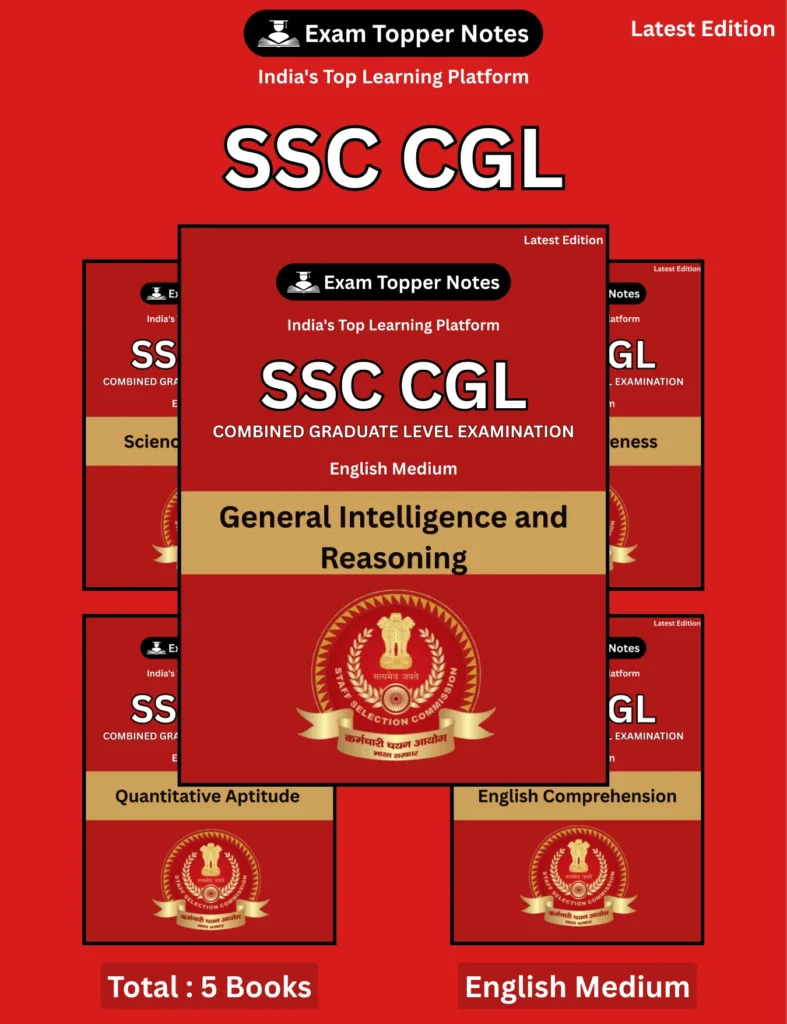
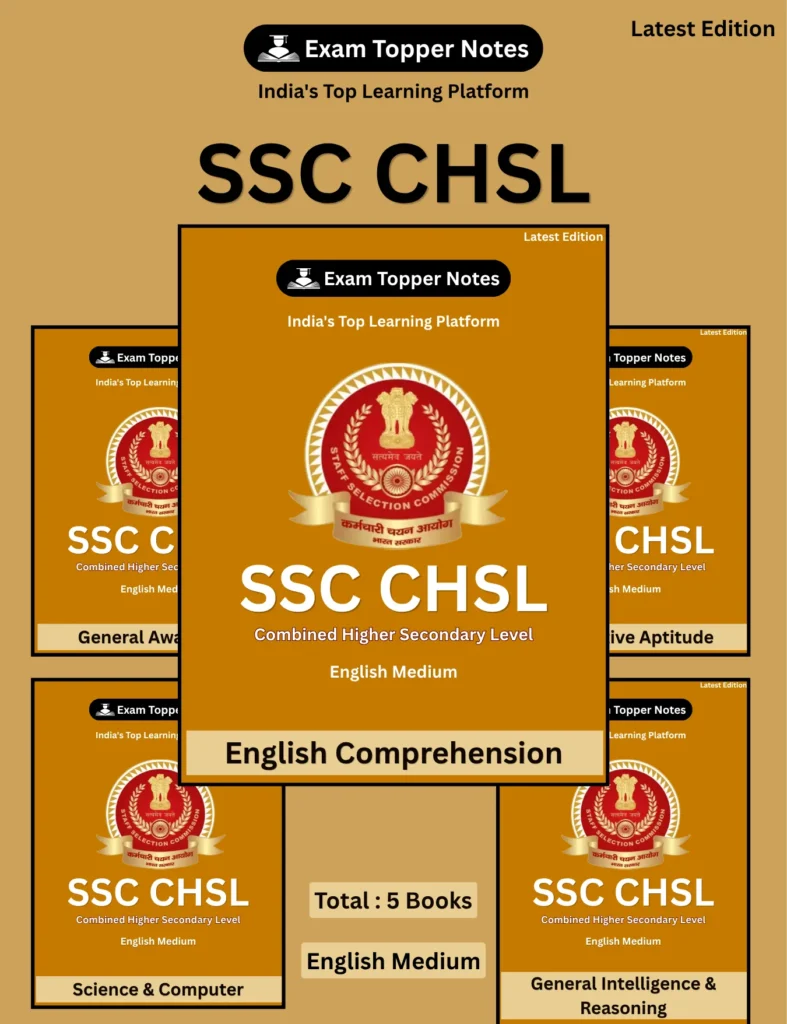
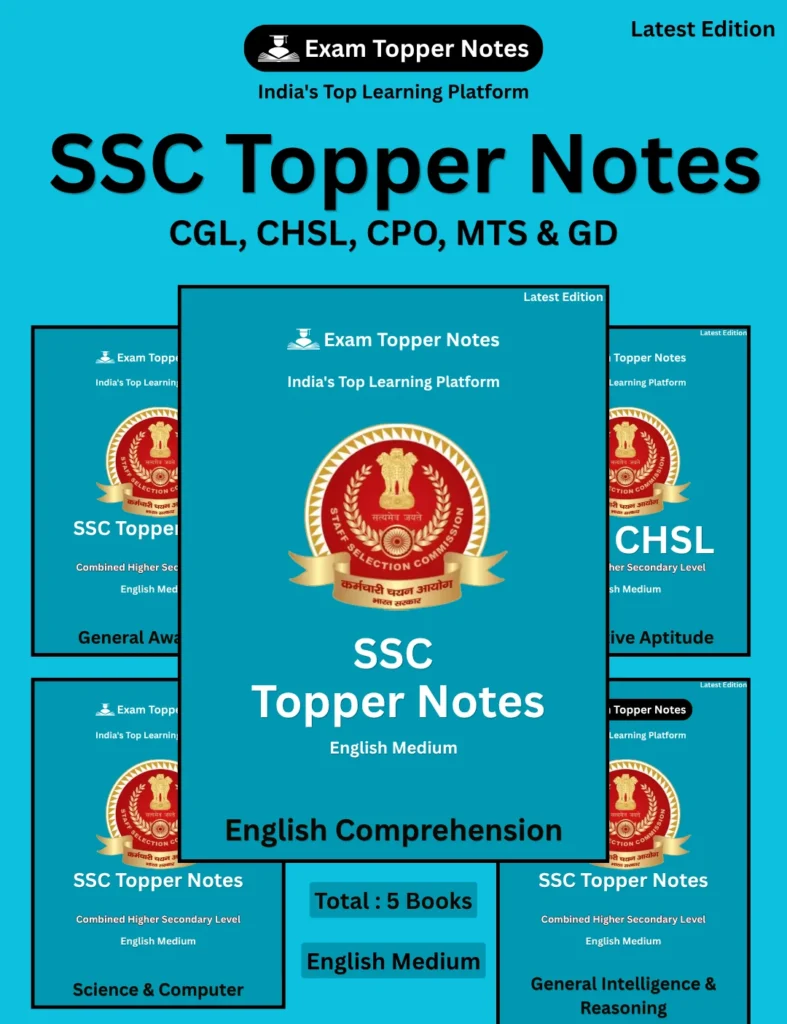
Key SSC Exams Covered
These topper notes align with the latest revised exam patterns and syllabi set by the Staff Selection Commission:
SSC CGL (Combined Graduate Level): Modules for Tier 1 and Tier 2, covering Advanced Maths, Computer Knowledge, Data Entry Speed Test guidelines, and Static GK.
SSC CHSL (Combined Higher Secondary Level): Targeted materials for LDC, JSA, and DEO posts, focusing on foundational arithmetic, clerical aptitude, and English grammar rules.
SSC CPO (Central Police Organisation): Specialized notes for Sub-Inspector (SI) posts in Delhi Police and CAPFs, emphasizing descriptive English vocabulary, comprehension, and reasoning.
SSC MTS & Havaldar (Multi-Tasking Staff): Simplified, bilingual formula sheets and general studies pointers for matriculation-level competitive recruitment.
SSC GD Constable: Rapid-revision notes for BSF, CISF, CRPF, and SSB recruitment exams.
SSC Selection Post (Phase Examinations): Custom subject guides categorized by Matriculation, Higher Secondary, and Graduation-level recruitment criteria.
SSC Stenographer (Grade C & D): General Awareness and English Comprehension revision binders designed for stenography candidates.
SSC JE (Junior Engineer): Non-technical common paper notes (Reasoning & General Awareness) alongside core revision summaries.
Comprehensive Subject-Wise Breakdown
[SSC Exam Syllabus]
       │
       ├── Quantitative Aptitude  ──> Arithmetic, Advanced Maths, Speed Formulas
       ├── Reasoning Ability      ──> Verbal, Non-Verbal, Analytical Logic
       ├── English Comprehension  ──> 120 Grammar Rules, Vocab, Reading Passages
       └── General Studies (GS)   ──> Static GK, History, Polity, Science, Current Affairs
1. Quantitative Aptitude (Arithmetic & Advanced Maths)
Maths often determines the Tier 2 merit cut-off. Topper handwritten notes eliminate repetitive textbook derivations, providing:
Direct time-saving short tricks and mental calculation approaches.
Advanced Maths formula sheets: Geometry theorems, Trigonometric identities, Mensuration 2D/3D formulas, and Algebra shortcuts.
Arithmetic problem templates: Percentage fraction conversion tables, Allegation & Mixture hacks, and CI/SI ratio shortcuts.
2. General Studies & Static GK Notes
The General Awareness section is vast, but scoring consistently comes down to high-frequency themes:
Static GK Quick Reference: Classical dances, national parks, wildlife sanctuaries, historical monuments, folk festivals, and sports awards.
Polity & Constitution: Key articles, fundamental rights, constitutional amendments, and parliamentary procedures.
History & Geography: Chronological modern Indian history timelines, river systems, mountain passes, and climate patterns.
General Science: Core summaries of NCERT Physics, Chemistry, and Biology.
3. English Comprehension & Vocabulary
Scoring in SSC English depends on grammatical precision and active vocabulary recall:
120 Golden Rules of English Grammar: Concise notes on subject-verb agreement, prepositions, conditionals, and error-spotting rules.
High-Frequency Vocabulary: 1,500+ PYQ-tested One Word Substitutions, Idioms & Phrases, and Synonyms/Antonyms.
Reading & Para Jumbles: Structural elimination techniques for sentence rearrangement and Cloze tests.
4. General Intelligence & Reasoning
Reasoning requires consistent practice and standard pattern recognition:
Coding-decoding, number series, syllogisms, blood relations, and direction tests.
Non-verbal visual shortcuts: Mirror images, paper cutting, and embedded figures.
Feature Comparison: Traditional Books vs. SSC Topper Notes
| Feature | Standard Reference Books | SSC Topper Handwritten Notes |
| Content Volume | 600–900 pages per subject | 80–120 pages of high-yield points |
| Revision Time | 3–4 weeks per round | 2–3 days prior to exam |
| Format | Dense academic text | Clean diagrams, bullet lists, short tricks |
| PYQ Integration | Separate question banks needed | PYQ patterns highlighted in-line |
| Exam Focus | Covers theory exhaustively | Curated for maximum scoring efficiency |
Everything You Need to Know About SSC Exams
The Staff Selection Commission (SSC) conducts national recruitment drives to select personnel for Group “B” (Non-Gazetted) and Group “C” posts across central ministries, attached departments, and subordinate offices. Clearing these exams requires mastering both foundational concepts and exam-specific tier structures.
Major SSC Exams at a Glance
| Exam Name | Educational Qualification | Age Limit (General) | Popular Posts / Designations |
| SSC CGL | Bachelor’s Degree (Any discipline) | 18–30 / 32 years | Assistant Section Officer (ASO), Income Tax Inspector, Central Excise Inspector, Auditor |
| SSC CHSL | 12th Pass (Higher Secondary) | 18–27 years | Lower Division Clerk (LDC), Junior Secretariat Assistant (JSA), Data Entry Operator (DEO) |
| SSC CPO | Graduation + Physical Standards | 20–25 years | Sub-Inspector (SI) in Delhi Police, CAPFs (BSF, CISF, CRPF, ITBP, SSB) |
| SSC MTS & Havaldar | 10th Pass (Matriculation) | 18–25 / 27 years | Multi-Tasking Staff (Peon, Daftary), Havaldar in CBIC & CBN |
| SSC GD Constable | 10th Pass (Matriculation) | 18–23 years | Constable (General Duty) in Paramilitary Forces (BSF, CISF, CRPF, SSB, ITBP) |
| SSC Stenographer | 12th Pass + Steno Skill Test | 18–30 (Gr C) / 18–27 (Gr D) | Grade ‘C’ & ‘D’ Stenographers in Central Tribunals & Ministries |
| SSC JE | Diploma / Degree in Civil, Mech, EE | 18–30 / 32 years | Junior Engineer (CPWD, MES, Border Roads Organisation) |
Selection Process & Examination Structure
Major exams such as SSC CGL and SSC CHSL follow a multi-tier computer-based test (CBT) pattern:
Tier 1 (Screening Test): 100 questions covering Quantitative Aptitude, General Intelligence & Reasoning, English Comprehension, and General Awareness (200 marks, 60 minutes). A negative marking penalty of 0.50 marks applies for every incorrect answer.
Tier 2 (Merit Examination): Evaluates Mathematical Abilities, Reasoning, English Comprehension, General Studies, and includes a mandatory qualifying Computer Knowledge Module. A penalty of 1 mark applies for incorrect attempts in core sections.
Data Entry Speed Test (DEST): A mandatory qualifying skill and typing test evaluated directly after Tier 2.
To master basic concepts before revising with condensed formula sheets, build strong foundational clarity with structured interactive mentorship through online coaching classes. To track topic-wise weightage and updated tier formats, consult the detailed official exam syllabus and pattern guide.
Recommended Preparation Resources
Course Syllabi: Review the comprehensive breakdown of tier-wise topics, section weightage, and marking schemes via the official exam syllabus. SSC CGL Syllabus Here.
Live Batches & Mentorship: Strengthen your concepts from scratch with structured online coaching classes and subject-matter experts.
Flagship Strategy Guides: Follow comprehensive tier-wise preparation roadmaps tailored specifically for CGL, CHSL, and CPO.
Mock Drills & Question Banks: Test speed and accuracy using full-length sectional mocks and previous year question papers.
Grammar Mastery: Revise high-frequency rules, idioms, and one-word substitutions to eliminate negative marking in error spotting and cloze tests.
Official Verification & Reference Sources
Staff Selection Commission Portal: Use the official portal to track active vacancy notifications, submit application forms, and download admit cards.
NCERT Textbooks: Refer to foundational NCERT General Science, History, and Geography textbooks for basic conceptual clarity.
Press Information Bureau (PIB): Follow official government releases to track authentic national policies, ministry schemes, and socio-economic updates.
Crack SSC CGL with Topper Teachers Academy
Mastering the SSC CGL exam requires speed, precision, and targeted preparation. Topper Teachers Academy delivers an all-in-one prep ecosystem built specifically around the latest pattern to take you from Tier 1 straight to the final merit list.
Why Choose Topper Teachers?
Integrated Tier 1 + Tier 2 Coaching: Dual-stage prep focusing on high-weightage Maths, English, and General Studies right from day one.
Exclusive Topper Study Kits: Comprehensive notes packed with Maths short-tricks, Static GK mind maps, and English grammar golden rules.
CBT Mocks & Analytics: Real-exam simulation with negative-mark control and percentile tracking.
Computer & DEST Training: Special modules for qualifying Computer Knowledge and speed typing tests.
Flexible Learning: Available via Classroom Batches in Pune and Live Interactive Online Batches on the mobile app.
Boost your score today.
Frequently Asked Questions
Q1. What are SSC topper notes?
SSC topper notes are concise, well-organised notes that cover high-priority topics for SSC exams, based on the preparation strategies and handwritten notes of successful candidates.
Q2. Are SSC topper notes enough to clear SSC CGL?
Notes are an excellent core resource for quick revision and concept clarity, but they work best when combined with regular practice, previous year question papers (PYQs), and full-length mock tests.
Q3. Are the notes available in Hindi?
Yes, the notes are available in both Hindi and English mediums, along with bilingual formula summaries for quantitative and science topics.
Q4. Can I download SSC topper notes as a PDF?
Yes. The notes are available in downloadable PDF format optimized for mobile, tablet, and desktop reading, as well as print-ready copies for offline study.
Q5. How often are the notes updated?
Notes are updated continuously whenever there is an update to the SSC syllabus, question weightage, exam pattern (including Tier 2 changes), or significant current affairs developments.
Q6. Are these notes useful for SSC CHSL, MTS and GD as well?
Yes. The core syllabus—comprising Quantitative Aptitude, Reasoning, General Awareness, and English—is shared across SSC CGL, CHSL, MTS, GD Constable, CPO, and Stenographer exams.
Q7. Is there a free sample available?
Yes, you can download a free sample chapter PDF to check the handwriting clarity, diagram quality, and note structure before purchasing the full kit.